Greeks in Afghanistan
05 February 2026
Greeks in Afghanistan and how Hellenism developed into Graeco-Bactrian culture
We know that the reason the Greeks got into the region of modern Afghanistan and central Asia was the military campaign of Alexander the Great. So, let's see why and how Alexander had to come to Bactria and beyond? In this paper we will try to stay focus on what had happened in the region of modern Afghanistan only.
After the defeat of the Persian might in the battle of Gaugamela, Darius III escaped from the battlefield again, as he did in the battle of Issues earlier and that was the beginning of the end the Achaemenid Empire. Although by then, Alexander was literary considered to be the sole ruler of the Persian empire, but to make sure, he still had to catch Darius as he was still alive. Before Darius fell into Alexander’s hand, Bessus one of Darius's top generals and the satrap of Bactriaand Sogdiana killed him. Then he declared himself as Darius's successor or King of Persia and escape into his territory, Bactria. Two other satraps who were also involved in Darius's murder in collaboration with Bessus were also with him. They were Nabarzanes and Barsaentes, who were the satraps of Arachosia and Zaragiane, which were in the territory of modern Afghanistan too. For Alexander to make sure that there is no more threats or challenges remain, he had to pursue Bessus into Bactria and this was why he had to enter that region.
The first Greek's contact with the people of modern Afghanistan happened in year 330 BC. Alexander's first entry into modern Afghanistan was into the city of Aria or the modern-day western city of (Herat) in Afghanistan. While he was on his way to Bactria, he came to know that Satibarzanes, the satrap of Aria, was arming the Arians and preparing to attack Macedonians in support of Bessus in Artakoana, the capital city of Aria. Alexander easily captured the city after chasing some fighters who were involved in the revolt. From there Alexander moved to Zarangiane, where he had minor clashes with Balochi tribes in the region. This ancient tribe is still spread cross brooders between Afghanistan, Pakistan and Iran. Alexander advanced further ahead to the region of Arachosia, where he took the city with not much of a resistance. He had also made his first contacts with Indians on the east side of Arachosia. Arachosia was the place where he founded one of his first bases or Alexandria in modern Afghanistan. While he was there, he came to know that Satibarzanes returned with some 2000 cavalry, helped by Bessus, attacked the capital city of Aria (Herat) and captured it. Alexander had to send some troops back there to punish Satibarzanes. There was a very fierce battle, a big massacre and total destruction of the city before the Macedonians re-take the city. To avoid future attacks, Alexander ordered the building of another base or Alexandria in Aria (Herat). At this point Alexander received the news that Bessus is somewhere in south- eastern Caucuses (Hindukush) mountains. He advanced towards Caucuses and reached the base of the mountains, but there he heard that Bessus fled toward Bactria to the north side of the mountains. To prepare for further advance towards northern Hindukush, he had to establish a military base, or another city named Alexandria. Some of the Greek sources named this place as Paropamisadae. Alexander used one of the two known most popular passes to cross over to the north side of the mountains at the heights of over 12000 feet, called Khawak pass. This pass is still in use by locals. Bessus hearing that Alexander was on his way, he wasted the land in the areas north of Hindukush in Bactria and himself crossed the Oxus river into central Asia toward Sogdiana. He also burned and destroyed all the vessels around. Arrian mentioned that Alexander moved his army to the city of Aornos, the biggest city in Bactria. After the expedition to Sogdiana in central Asia with tough battles, Alexander returned to Zariaspa in northern Afghanistan, where few fugitives like Bessus, Arsakes and Brazanes were brought to him and they were punished. Zariaspa or Bactra-Zariaspa was the capital of Bactria in those days. While he was there, the conspiracy of few Macedonians was also revealed against Alexander's life and the people involved were punished including Calisthenics. At this point Alexander had to cross the Oxus river again to deal with Sogdians revolt. While he was there Spitamenes of Sogdiana attacked Bactrian fort, killed many Macedonians and moved to Zariaspa, looted the place and fled. To sort things out in central Asia and Bactria, Alexander stack there for a very long time, with few battles, chasing fugitives and specially the capturing of the (Rock) was one of the toughest challenges. Among the prisoners of (Rock) there were women and children too. Among the imprisoned women there was a young girl named Roxane who was the daughter of Oxyartes. This girl was so beautiful that Alexander fell in love with immediately and decided to marry her. Hearing this, her father Oxyartes decided to come and surrender to Alexander. It took about 3 to 4 years for Alexander to deal with issues in Bactria, central Asia, northern and southern Hindukush. Towards the beginning of summer of 327 BC, Alexander decided to move towards India and left Amyntas in charge of Bactra. It took him ten days to cross back to the south Hindukush over the same pass and return to the Caucuses (Paropamisadae), where he already founded an Alexandria. He tried to sort out the settlement in that city by bringing some people/voluntaries from the neighborhood to settle them in the new city and left Tyriespis as the satrap of Paropamisadae. Still in eastern Afghanistan and on his way to India, in modern city of Jalalabad, Alexander split his forces in two direction going to towards east. From there he sent an advance message to the rulers in Taxila to present themselves while the opportunity was there, for their own good, and that was exactly what the leaders in Taxila did. Hephaestion was sent with the largest part of the troops to Peukelaotis on the western side of the Indus river, just over the modern Khyber Pass to subdue those tribes, who were creating troubles for any passing forces in the area. Hephaestion used both force and money to make these tribes to cooperate and to provide a safe passage to Indus. The city of Peukelaotis put up some resistance, but Hephaestion took the city after a siege of a month. Alexander himself with the rest of his troops took another route through the mountainous area to the cities of Aspasians, Goranians and Assakanians on the northern side of the river called Choes. He faced a tough fight and resistance from the people in the area, where Alexander himself and Ptolemy both got wounded. The people in these areas were never ruled or governed by anyone before, including the Persians. This is why they were resisting very badly. The second city of Andakasurrendered, the leaders came with some gifts to welcomed Alexander. Alexander proceeded to the city of Aspaians, but the locals burned the city before the Macedonians reach there and fled to the mountains and positioned themselves for the defense. Chasing the locals in the very rough terrain, a fierce battle continued on foot, where Ptolemy was wounded and almost killed again by one of the chiefs of the tribe. Arrian tells us that: "the battle against these men was fierce due to the difficulty of the terrain and because these Indians were not like the other barbarians of the region, but by far the most warlike". Alexander ordered to fortify a site where the old city was and to settle some people from the neighboring tribes and some Macedonians who were not fit anymore to continue. This can be considered as another Alexandria in eastern Afghanistan. These pockets of Greeks mixed with Persians and local populations remained there even after Alexander's death. Initially these territories were under the rule of Seleucids and later the Graeco-Bactrians of north Hindukush. After the fall of the Graeco-Bactrians in the north by the central Asian Turkic tribes, some of the Greeks moved to south Hindukush to Paropamisadae, where Greeks were still the rulers of the region. "Tarn suggested that after the collapse of the northern kingdom, few members of the Greek military aristocracy must have escaped to the hills, seeking refuge in the high valleys from the nomadic horsemen of the plains. Some of these refugees may have set up petty kingdoms of their own, which in time lost their distinctiveness and merged with native elements. It was these Greeks who were the basis for the Alexander's-decedents of the hill chieftains in central Asia". In those same remote and isolated mountainousareas, there are still some tribes who have always had this claim that they are Greeks or the decedents of Alexander the Great. Few British officers during the colonial times in India who had expeditions into these remote areas have recorded the similar claims from the chieftains of these tribes. They have Mediterranean features, some of them with blue eyes and blond hair (Fig.1). They have had or still have their own languages and religious tradition which are very different than the common languages and religions of the region. Although the Nooristanis in Afghanistan were converted to Islam by an Afghan king in 1890s, but still some
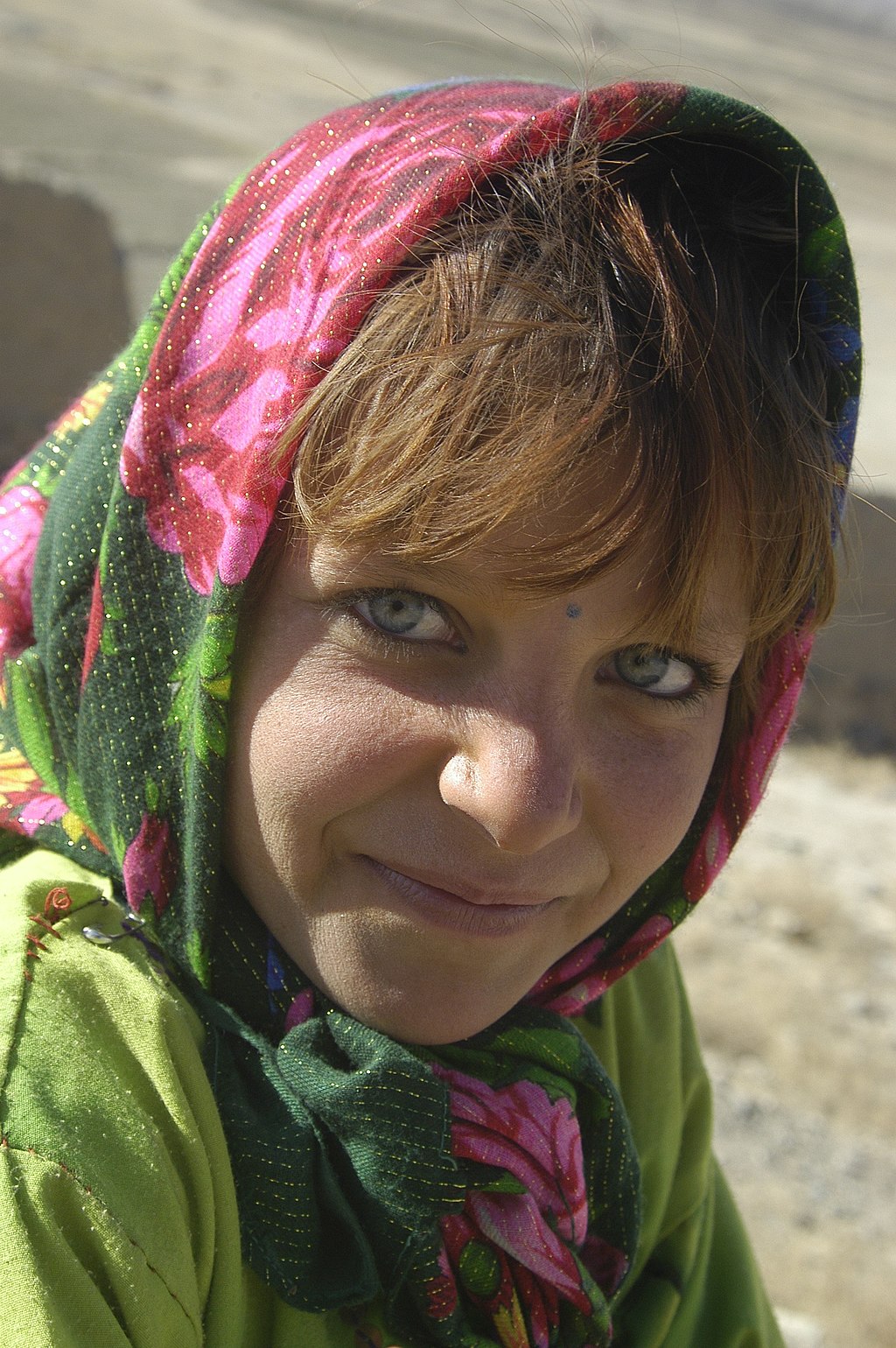
Fig. 1; A young Afghan Nooristani girl at a Kabul orphanage in January 2002
On his way back and his untimely and sudden death in Babylon, Alexander's vast empire couldn't stay united under one command and broke into three major parts under the rule of his senior generals. The eastern part of the empire was controlled by Seleucus. This part of the empire was the largest in size, with diversity of cultures and people. Although the Greek rulers were trying to spread Hellenism through their ways of government, architecture, lifestyle and religion, but they had to accommodate some local traditions and cultures as well, so that they could integrate different people together. This cultural integration in Bactria is then called the Graeco-Bactrian culture in northern Afghanistan. Since the absolute majority of Macedonians and Greeks were men of military, government workers and other Greek functionaries, it is obvious that they must have married Bactrian women, which was resulted in a natural mix of people in later years. The Seleucid eastern Graeco-Bactrian empire included, but not limited to the provinces of Aria(Herat), Zaragains (Zaranj), Arachosia (Kandahar) and Paropamisadae (Bagram) in southern Hindukush, all in modern Afghanistan. In addition, some provinces in central Asia (Sogdiana), Farghana plus Parthia, all the way to the Indus River in India. Some official Afghan cultural sources mention few foundations (Alexandrias) in Afghanistan founded by Alexander the Great. As mentioned before these foundations were mainly military bases to protect the territories conquered within modern Afghanistan from the warlike people who were harassing Macedonians with gruella type of attacks. Those bases include Herat 330 BC, Zaranj 330 BC, Kandahar 330/329 BC, Bagram 329 BC, Ai-Khanum 328 BC and possibly the one in Nooristan. Alexander left behind hundreds or even thousands of Macedonians and Greeks, like those who were not fit for war anymore in those bases. These troops kept the areas safe for Alexander till his last stop in India in 326 BC and his return. In almost all the above-mentioned locations a military base or a city was founded by Alexander.
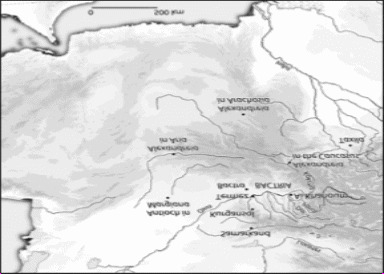
Fig. 2; Map of Hellenistic central Asia (ancient cites are shown in italics; modern cities are shown in roman)1
The Greek kingdom of Bactria was part the Seleucid’s empire until the empire became weak due the internal conflicts with other Greek kingdoms in the west. Around the middle of the third century BC, Diodotus declared independence and established his Graeco-Bactrian kingdom with its capital in the province of Takhar in northern Afghanistan. This is exactly where the archaeological site of Ai- Khanum is located. Later on, Demetrios one of the Graeco-Bactrian kings made some incursions into southern Hindukush and got control of parts of western India. After the Graeco-Bactrian kingdom fell in the north, southern Hindukush remained as an Indo-Greek kingdom until its complete fall at around 50 BC. The Graeco-Bactrian kingdom in northern Hindukush collapsed earlier around 145 BC by the invasion of central Asian horsemen.The total period of Graeco-Bactrian in the north and Indo-Greek kingdoms in south Afghanistan lasted for about three centuries altogether. It is believed that previous capital of Bactria was the city of Balkh, where the ruins of an old walled city still exist (Fig.3). Balkh is one of the oldest cities in Asia, where different civilizations were founded, lived and ruled the area for more than 2500 years. The Arab historians called it Omul-bellaad (the mother of cities). The most important city of the Graeco-Bactrian is known to us is the city of Ai- Khanoum, which was the capital of Bactria later on. Bactria, Sogdiana, Aria, Arachosia, Paropamezadae and north-western India was in direct contact with the western Hellenistic Kingdom until 245 BC, when they were separated as independent kingdom under Diodotus. As mentioned by Robinson "Of the things done by Greeks in Asia nothing was more important than, for it really touched the native mass. The Greek kings, moreover, won the loyalty of the Bactrian aristocracy, as Alexander, by marrying into it, had done. The result was something like a double state, with the Bactrian landowners managing their states and yet coming to court and sharing the administration".
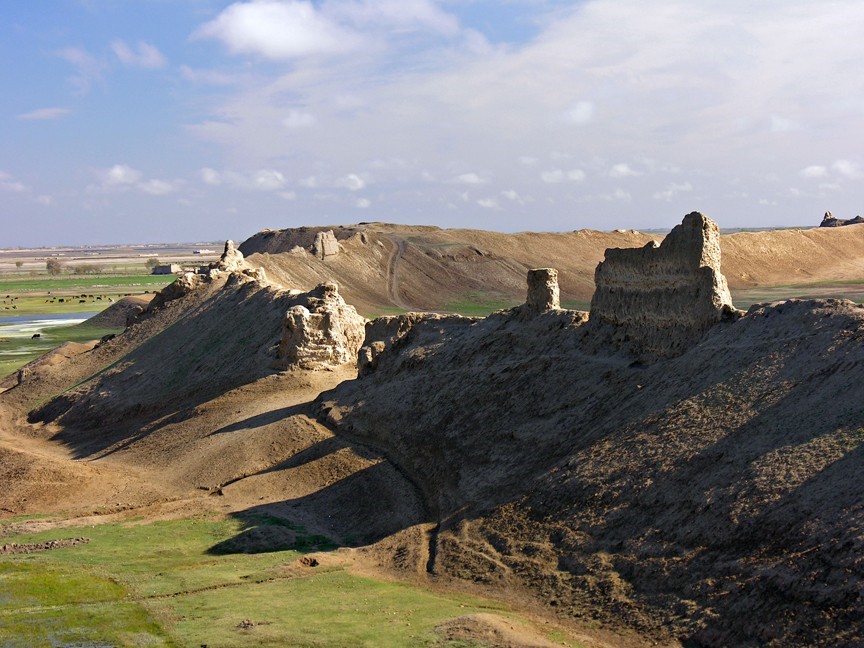
Fig. 3; The remains of the walled city of Balkh in northern Afghanistan
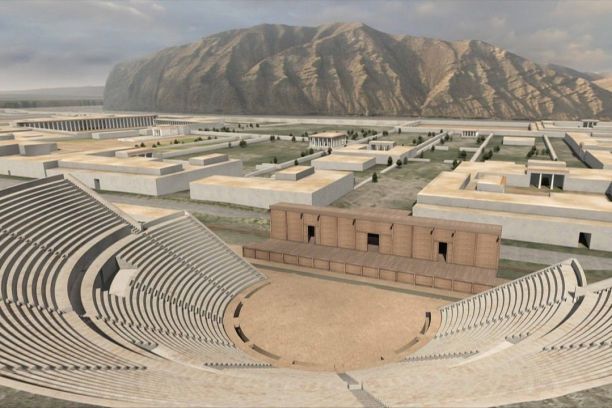
The archaeological discoveries of 1960s in the region were the most significant in Hellenistic world, which revealed the existence of Greek civilizations and even Greek style of cities in the region, specifically the Ai-Khanum in northern Afghanistan. The local story is that, in 1961 the late King Zahir Shah of Afghanistan, who was very fond of hunting, was in one of his hunting trips in the area that he stumbled across the ruins of an ancient site. Then he arranged for a French archaeological team headed by Paul Bernard, to come over for more investigations, which followed by an archaeological survey and excavation. As a result of their professional work, the team discovered a very unique Graeco-Bactrian site of an ancient town. This city was named as Ai-Khanum, in Uzbek language, one of the regional Turkic languages in northern Afghanistan. Ai-Khanum means (the Lady_ Moon), Khanum means Lady and Ai means moon. We don't know how the Greeks called this town and why the Greek name of this city was not mentioned by any historian. As the technology helped us in every aspect of life, it helped us in better expressions of the archaeological findings as well. The creation of three-dimensional images of Ai-Khanum by a Japanese company the TASEA Corporation, significantly added to our knowledge of the site. The images in the video clip literary walk us through the palace and the entire city of antiquity. The video of the 3D images of the palace can be found in YouTube, for those who are interested. The site had a very similar design and architecture of a typical Greek city, with a gymnasium, amphitheater, temples and Greek style of houses. Ai-Khanoum is located in north-east of modern Afghanistan, in the province of Takhar, right at a confluence of Kokcha and Amu rivers. The Greeks called Amu river as Oxus river, which is one of the biggest rivers in central Asia. Although C. RAPIN mentions in his paper that Ai-Khanoum is not located on the famous Silk Road, but some local sources believe otherwise.
See pictures below: (Fig. 4, 5, 6 & 7).
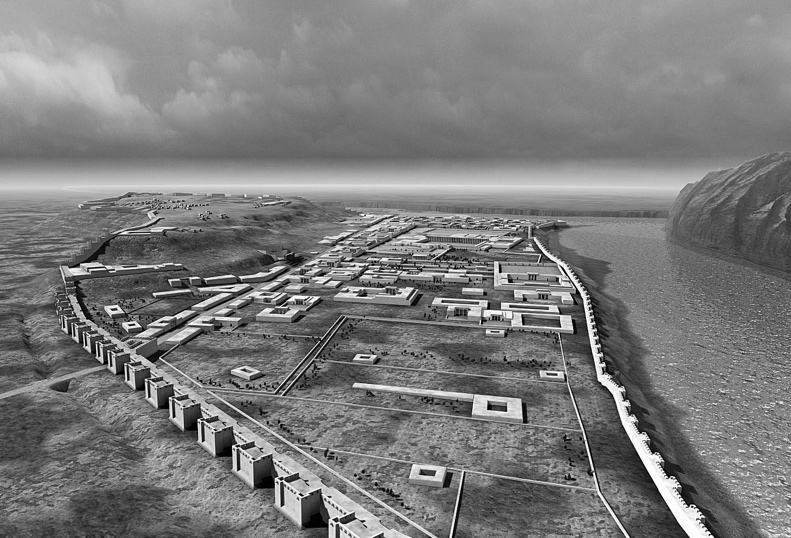
Fig. 4; Reconstructed view of Ai Khanoum (G. Lecuyot and O. Ishizawa; courtesy NHK/TASEI)
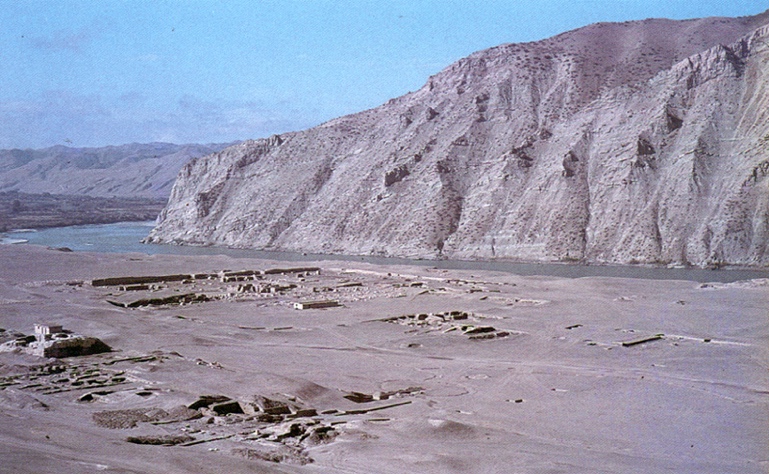
Fig. 5; The sites location on the confluence of two rivers
Although this colony of Ai-Khanoum founded much later then the Alexander's death, around 281-216 BC, but during his campaign Alexander passed through this exact area, before crossing the Amu river, when chasing Bessus and founded a military base there. The site kept developing since it was founded, but it was during the reign of Eucratides that it took its latest form (170-145 BC). It seems like Ai-Khanum was designed as a city from the beginning, because the entire triangular space was occupied right from the start, which can be seen from its streets that were never changed. The Hellenic cities were always founded by the decisions of the kings. It is clear that Ai-Khanum was built for the king as a palace, as the capital of Bactria, after Bactria's cessation from the Seleucid's empire as an independent kingdom. In the residential area in Ai- Khanum, the large houses show that the residents were reach. Houses had large courtyards, which seems to be used by families. Even today the traditional houses in Afghanistan have similar setup, with half the plot used as a courtyard for family relaxation and privacy. Some rooms had the fireplaces, as winters were cold in Bactria. The theater with the diameter of about 85m had the capacity of up 5000 seating, which is believed to be one of the largest in the Greek world. Bernard believes that the way the residential rooms were setup are similar to Achaemenid period. For example, rooms were aligned on the same side of the courtyard, which followed the Achaemenid type of design. He gives similar examples in the design of the palace too.
Fig. 6; The city map of the site (Ai- Khanum)
The region where Ai-Khanum was built was and still is a very productive agricultural land and rich of mineral and gold mines. Even today people in Badakhshan province are washing gold at Kokcha river in the old traditional way. The Lopez lazuli of Badakhshan is still popular worldwide. One of the similarities of this site with other Seleucid Hellenistic cities is its closeness to the riverbanks, as the one on river Tigris. The traditional system of irrigation was used by network of canals from the river which were bringing running water inside the city. Similar irrigation system is still in use in most parts of Afghanistan. The town included all necessary buildings such as the palace, mausoleum, gymnasium and a theater. The houses or residential buildings have all necessary amenities, such as bathrooms with water heating systems and fireplaces. C. Rapin, also suggests that the site of Ai- Khanum belongs to the late 4th or the beginning of the 3rd or even mid- 2nd century BC. There is a universal agreement that the city was constructed after Alexander's death. The same paper mentioned that, although there were some traces of pre-Greek and post-Greek at its southern end, but otherwise the entire site represents a Hellenic city of the Graeco-Bactrian period. It occupies the area of about 3 km2.
Fig. 7; Digitally reconstructed picture of the site.
Rapin also tells us about the archaeological finds and the document from the site that shows a date which relates Ai-Khanoum to Eucratides’s as his capital. Also, the findings of some coins and other objects which represent Indian myth, shows that there was certainly contacts with India.We know that Encratite had some expeditions across the Hindukush to Indian territory in southeast. He also indicates that among archaeological findings there is no inscription to reflect anything after 145 BC and the evidences of fire shows that the site may have been taken and burned by invaders by then. We know from different sources that the Greek reign was ended by continuous invasions of the central Asian tribes, which they came down to Bactria waves after waves. Although the Graeco-Bactrian civilization is not mentioned very often, but scholars were very interested in different coinage found in Ai-Khanum . The design and architecture used in building of Ai-Khanum city is a mixture of Greek, Achaemenian, Babylonian and the traditional Bactrians style. Although there was not much of stone carved inscription in the site, but some other forms of documents like papyrus written in Greek has been discovered in a room, which was possibly used as library. One of the documents is a kind of philosophy which is possibly belong to Aristotle, dated back to the 3rd century BC. Another one is a piece of poetry. This tells us that the Graeco- Bactrians were familiar with Greek philosophy, poetry, comedy and tragedies. It also shows that the Greek language was still in use by Graeco-Bactrians. We can at least say that the Bactrians who worked in the administration and in the court knew the Greek language. Some Greek style of kitchen potteries and also Greek sculptures were found. The rooms were paved with pebbles in mosaic. The mosaic of bath floors in the palace display dolphins, sea horses and sea monsters, created by arranging colored pebbles instead of squared stones (Fig.7). These are the creatures which are not found or seen in Bactria.
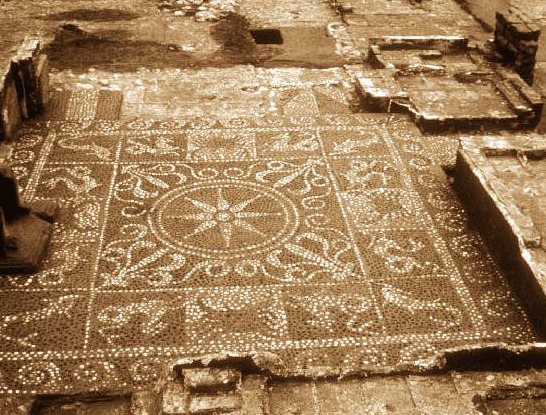
Fig.8; Ai-Khanum mosaic floor, pebbles used
A monumental part of a cult statue, only a sandaled foot and some other small fragments survived (Fig.8). According to Rapin, the statue would have been in a Greek style, and could have been a synthetic Graeco-Oriental deity.
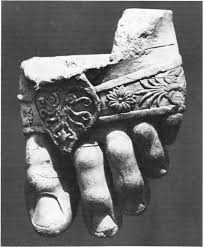
Fig.9; Sandaled foot found in Ai-Khanum
The discovery of the Faience Head (Fig. 9) was unique and the largest faience sculpture in the Hellenistic world. Nowhere else Greeks used faience to make statues. They were only used to make dishes earlier, especially in Egypt. So, the Greeks in Bactria may have learned this from locals or Indians later. Since there is no inscription related to the statue, archaeologist compare the head with the coins found at the site and compare the head with coin belongs to Demetrios I elephant scalp and with the reconstructed picture they believe that the faience head may be of king Demetrios I. The existence of elephant reflects Demetrios's connection with India, which tells us that he may have been ruling south Hindukush and west Indus.
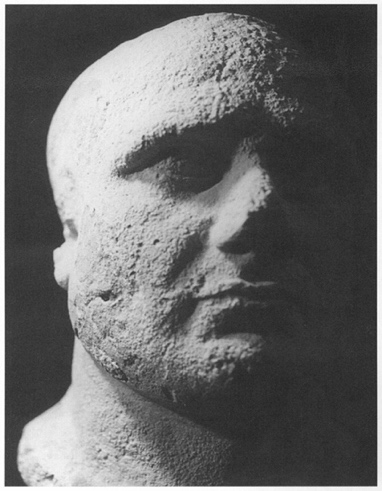
Fig. 10; Faience head of a Graeco-Bactrian king from Ai-Khanum found in 1998
The portrait of Demetrios I and reconstructed image or drawing of the faience head from Ai Khanum
A picture of a couple of golden coins found in Ai-Khanum, which is considered to be one of the biggest golden coins from the Hellenistic era (Fig. 10). The coins belong to Ecuratides, who is known to be a powerful and rich king, possibly the last king in Ai-Khanum (171-145 BC).
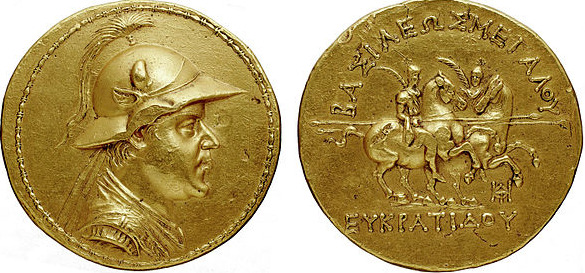
Fig. 11; Golden coins of 171-145 BC found in Ai-Khanum.
The plate below belongs to the 2nd century BC, shows different images of Graeco-Bactrian culture mixed (Fig. 11). It reflects both Zoroastrian and Greek gods, as we can see the sun god and the Greek god Cybele pulled by lions.
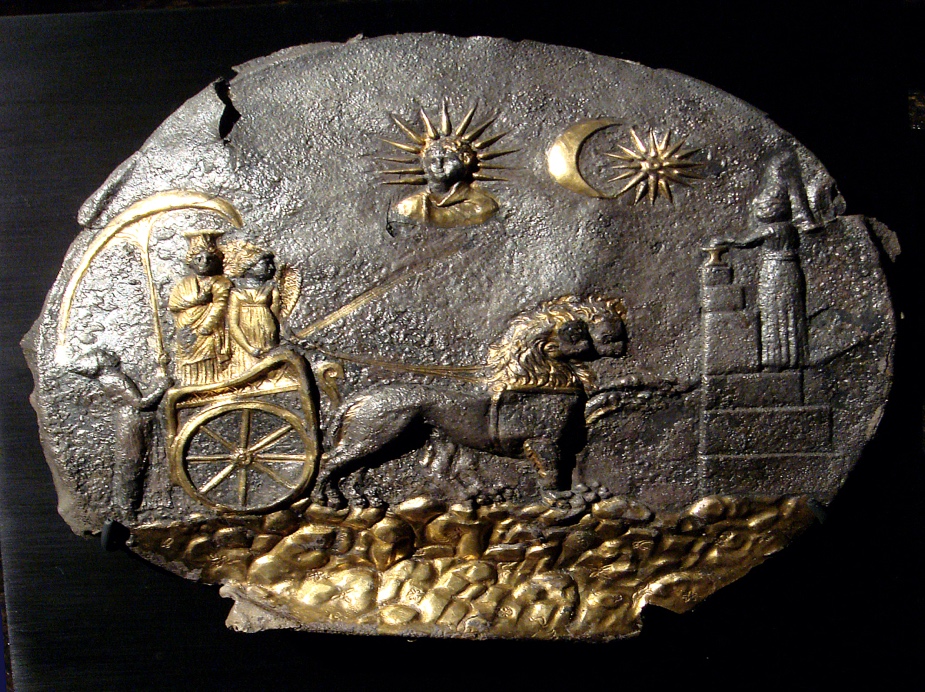
Fig.12; This plate is found by the archeologist at the site Ai- Khanum
It appeared that the Greeks retreated to southern Hindukush from the north and settled in the existed colonies around Paropamesade, which were known as the Indo-Greek kingdom. Around 50 BC that kingdom collapsed too with the rise of another powerful empire, the Kushans. The Kushans in their turn established a very progressive and civilized empire in which the art of Graeco-Buddhist sculpture, religion and philosophy developed and spread across the region of present Afghanistan, Pakistan and India, specifically in the region of Gangadhara.
As a conclusion we can say that the discovery of Ai-Khanum was one of the very important archaeological findings of time, that reveals the influence of Hellenic culture into the east which came as a result of Alexander's campaign and conquest of the Persian empire and further into India. The important part is that Hellenism influenced the east and mixed with Bactrian culture, but it was mostly a one-sided influence, meaning from Greek to Bactrian or Indian. This cultural influence is the most important thing, which is proved by the discovery of Ai-Khanum. In the Hellenistic period the commerce between east to west was not much important.
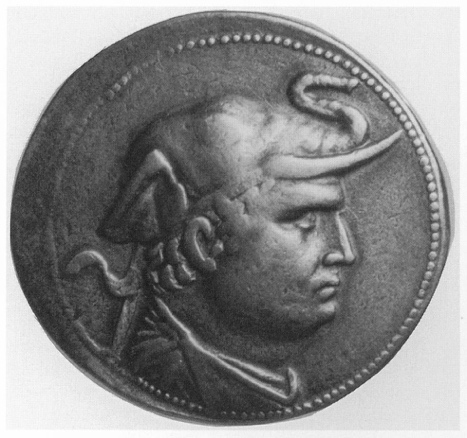
Fig. 13; Demetrius wearing an elephant scalp, symbolizing the ruler of India
As the Greek empire was weakening in Bactria toward the middle of second century, the Greeks were getting stronger in the east, by supporting Buddhism and becoming Indianized rather than Hellenized. Gandhara i.e. the area between Kunar river to Indus river, including Kabul, with its capital Pushkalavti (modern city of Peshawar) became a strong center for Buddhism, a new Hellas. This is where the Greek art of sculptures was introduced to Buddhism in Gandhara by making Buddha's statues as a man. This new idea of Greek art spread and glorified in the entire region, known as Graeco-Bhudic, where it still exists and being discovered in many archaeological sites in Afghanistan, including the giant Buddha statues in Bamiyan. Unfortunately, those exceptional statues were destroyed by Taliban in 1996, an unforgettable and unforgivable world cultural tragedy. The evidence of Arachosia's Hellenism was discovered on an inscription which was published in the Journal des Savants in 2002, discovered in Kandahar (Fig. 12). The inscription was engraved on limestone, found in Kandahar, which was a funerary inscription included twenty verses, composed by the deceased before his death. He was a descendant of an Indian settler by Sophytos, who became a Greek culturally by assimilation.
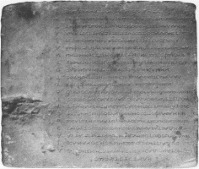
In the inscription Sophytos mentioned that he was born into an Indian family, received Greek education, can read, write, practiced poetry and more. Another exciting finding was the discovery of the bronze bath around the old city of Kandahar and the funerary urns felled with the ashes of dead, dated to second century BC, included the Greek gold leave crowns around the necks. These are just few examples of the existence and the practices of Greek culture within residence of the colony of Kandahar, Afghanistan.
Fig. 14; The inscription of Sophytos. (Private collection)
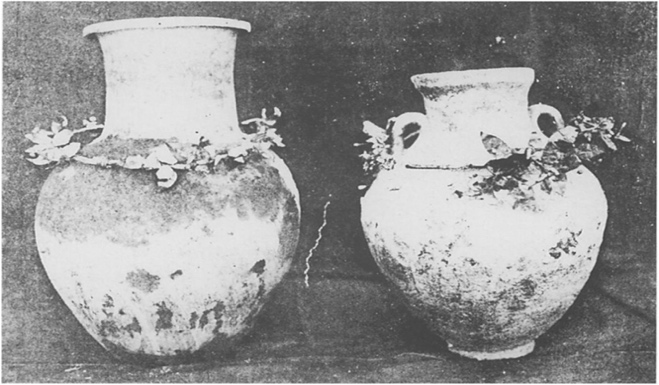
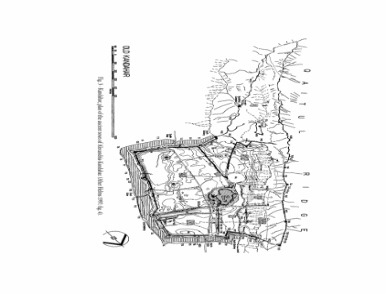
Fig. 16; Map of the ancient town of (Alexandria- Kandahar)
https://afghanpedia.com/exFolder/depot_images/tRWJ6TknBEata66Y.jpg
Because of the existences of few military bases or cities founded by Alexander during his campaign throughout Afghanistan, which they later became popular Greek cultural centers. For this very reason some sources call Afghanistan as the Asian Greece.
CONCLUSION
As we saw the first Greek contact to modern Afghanistan was Alexander's entry into Herat 330 BC. He continued on his military campaign through Afghanistan, capturing cities and localities within the area and founded military bases or cities. Due to tough terrain, local resistance and gorilla type of battles, it took Alexander four years (330 BC to 326 BC) to get through this small region of Afghanistan i.e. from Oxus to Indus, while he conquered the entire Asia minor, western Asia and Egypt in three years. This is one of the reasons that so many military bases or Alexandrias were built within Afghanistan. After Alexander, his large empire broke up and many Greek kingdoms were created, out of which the Seleucid empire was ruling present day Afghanistan, Pakistan and parts of western Indian for almost three centuries (330 BC to 50 BC) i.e. 280 years. Out of the many cities or Alexanderias, only one ancient city has been excavated, which is the one called Ai- Khanum in northern Afghanistan. This was a significant archaeological discovery of the Hellenistic world with typical Greeks style of Palace, Gymnasium, Theater and temple. Alexander himself left thousands or even tens of thousands of Greeks and Macedonians behind in those bases, cities or Alexanderias who have mixed with local populations through marriages and the descendant remained there for centuries, even to this day. The cultural influences of Greeks in Bactria, Paropamesadae and Gandhara through arts, architecture and lifestyle created new mixed cultures like Graeco-Bactrian, Indo-Greek or Graeco-Buddhism, especially the introduction of sculptures in Buddhism spread in the entire region, including China for centuries. Some historians called Afghanistan the Asian Greece.Hundreds or even thousands of coins belonged to those different Greek kingdoms were found in multiple places in Afghanistan, including gold and silver. Kabul museum was considered to be one of the richest museums in south Asia, which was unfortunately destroyed and looted during the 1992- 1996 war and even later in 1996-2001 during the Taliban rule in Kabul.